
Benefits (and Drawbacks) of QR Menus for Restaurants
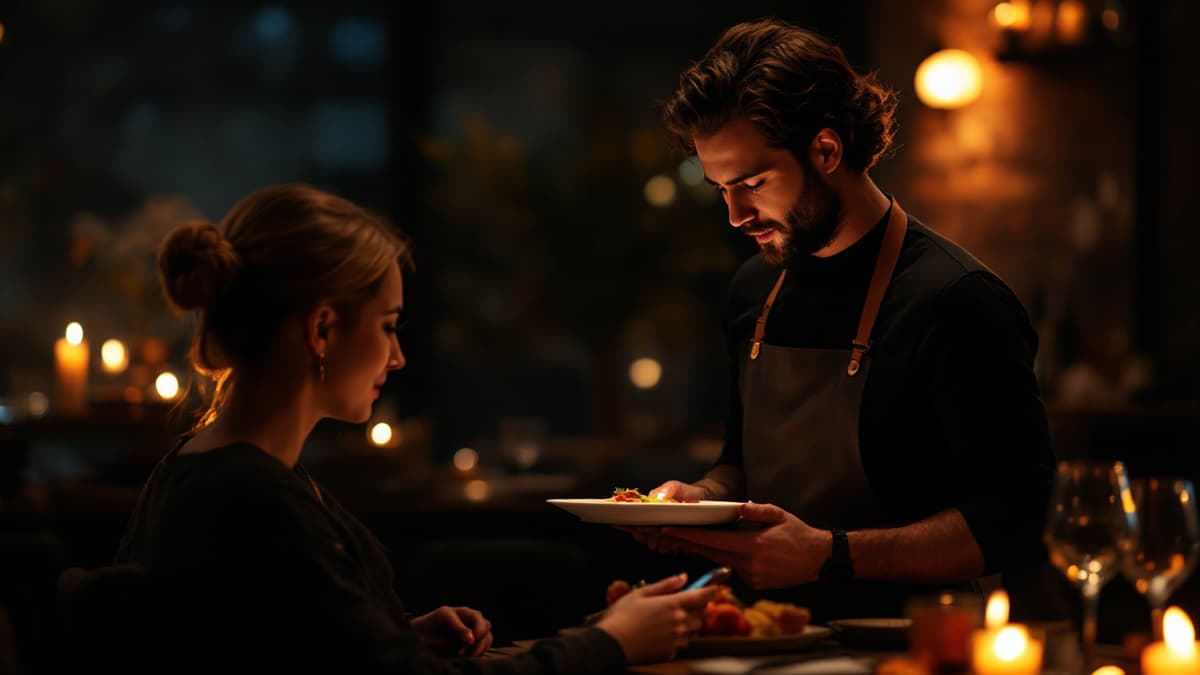
The QR menu took off during the pandemic and stuck around because the economics work. Print costs drop, average tickets go up, tables turn faster. It is not free of trade-offs, though, and not every restaurant needs one. Here is an honest breakdown of the benefits of a QR menu, each with real numbers, followed by the drawbacks nobody likes to mention and how to handle them.
How much does a QR menu save on printing?
A typical 20-table restaurant spends roughly €500-800 per season on printed menus. Laminated menu cards run €8-15 each once you include design tweaks and rush fees; you need two or three per table plus spares for the ones that get stained, torn or walk off. A QR menu cuts that recurring cost to near zero.
The killer is not the first print run. It is the reprints. A supplier raises the price of your house wine, VAT changes, the terrace season starts and you swap in a summer menu, then swap it back in October. Each of those events means reprinting the whole batch, because a menu with prices crossed out in pen quietly tells guests you cut corners. With a digital menu you edit the dish in the dashboard and the change is live at every table in seconds.
You do not have to go all-or-nothing either: Disho exports the menu to PDF, so you can keep a handful of paper copies printed from the same source of truth and only reprint those few pages when something changes.
Does a QR menu actually raise the average ticket?
Yes, when it has real media and not just text. Grubhub's research found that restaurants with photos and complete menu information receive up to 70% more orders and up to 65% higher sales than text-only listings. Guests who can see the crème brûlée crack or the steam rising off a ramen bowl order more starters and desserts than guests reading a two-word description. The engagement side we can measure directly: in our own beta restaurants on the Costa del Sol (30-day window), guests spend an average of 2 min 52 s in the menu and 51% open at least one dish card. That is browsing, not glancing.
Vertical 9:16 video, the format people already scroll on TikTok and Reels, sells hardest. That is why Disho renders each dish as a short autoplay muted video in a swipeable feed, with a Ken Burns photo animation as fallback when there is no video. You do not need a film crew: the dashboard generates a dish photo for about €0.15 and a video for about €2.20 from a single reference image.
The ticket lift compounds with smart menu structure: anchor pricing, dessert prompts, pairing suggestions. We cover those tactics in detail in how to increase your restaurant's average ticket.
How does a QR menu speed up service?
It removes the two longest waits in a sit-down meal: waiting to order and waiting for the bill. Guests browse and order the moment they sit down; the order arrives in the kitchen in real time, tagged with the table number, so nobody has to decode a scribbled ticket.
With per-table QR codes, each table gets its own unique link, and orders flow through clear statuses (New, Accepted, Ready, Served) with a sound alert so the kitchen never misses one. When guests are done, they pay at the table with Apple Pay or Google Pay instead of flagging down a server, and the money lands directly in the restaurant's own Stripe account.
In practice that means a server who used to cover five tables can comfortably cover eight, and on a busy Friday you turn tables 10-15 minutes faster. That is an extra seating per table per night, not a rounding error.
Can one menu serve guests in twelve languages?
Yes. A QR menu removes the classic tourist-district problem of printing (and updating) separate English, German and French cartes. Disho translates menu content into 12 languages (Russian, English, Spanish, French, German, Polish, Czech, Slovak, Lithuanian, Italian, Belarusian and Ukrainian) and each guest reads in their own.
AI-written descriptions cost about €0.03 per language and stick strictly to the ingredients you provide, so the translation never invents a garnish you do not serve. For a beach-town restaurant where half the covers in July are foreign, this alone can justify the switch: guests who understand the menu order confidently instead of defaulting to the one dish they recognize.
What does the data tell you that a paper menu can't?
A paper menu tells you nothing about how it performs; a digital menu shows you exactly what sells. Disho's analytics track revenue, average ticket, top dishes and order volume by hour. A paper carte simply cannot produce those numbers.
That turns gut-feel decisions into obvious ones. If the sea bass is your third-viewed dish but rarely ordered, the price or the description is wrong. If Tuesdays die after 21:00, you adjust staffing instead of guessing. If a dessert nobody orders occupies prime menu space, you retire it and promote the one that sells. Restaurants pay consultants for this kind of menu engineering; here it is a by-product of taking orders.
What are the honest drawbacks of a QR menu?
Three real ones: some guests simply do not want it, phones run out of battery, and basements have no signal. None of them is fatal, but pretending they do not exist is how QR rollouts fail. Here is each problem with its fix:
- Older or less digital guests. A share of your regulars will always prefer paper, and forcing them through a phone is bad hospitality. Fix: keep a few printed copies (exported from the same PDF, so prices always match) and train staff to offer them proactively, without making it awkward.
- Dead battery, no phone, or a guest who just won't. It happens every service. Fix: staff take the order the classic way. The QR menu is a layer on top of your service, not a replacement for it.
- No-signal basements and thick-walled buildings. A QR menu that will not load is worse than no QR menu. Fix: offer guest Wi-Fi and put the network name and password on the same table card as the QR code, so connecting takes one extra scan.
- A QR that opens a PDF is not a digital menu. It is a paper menu you have to pinch-zoom. No ordering, no payment, no per-language switching, no data. If you go digital, use an interactive menu.
And an honest boundary: a quiet 8-table bistro with a stable menu and regulars who know it by heart gets little from any of this. Paper is genuinely enough there. For a full side-by-side of costs and scenarios, see digital menu vs paper menu.
So is a QR menu worth it?
For most restaurants with 10+ tables, seasonal menu changes or tourist traffic, yes. The print savings alone (€500-800 per season) cover a subscription several times over, and the media-driven ticket lift is where the real return is. Start with the fundamentals in what a QR menu is and how it works, then open the live demo on your own phone. Two minutes of scrolling a video menu tells you more than any article.
Frequently asked questions
Do guests need to install an app to use a QR menu? No. A proper QR menu opens in the phone's browser instantly: scan, browse, order. Any product that requires a download will lose most guests at that step.
How much does a QR menu cost? Disho is free during the beta with no limits on tables, dishes or orders; after beta it is €40/month on the Pro plan with a 3-month trial. Compare that to €500-800 per season in printing and the math is short.
What happens if a guest's phone is dead or they refuse to scan? Staff take the order the traditional way, and you hand them a printed copy exported from the same menu. A QR menu should add a faster path, not remove the human one.
Does a QR menu work without mobile signal? It needs an internet connection, so in basements or thick-walled buildings offer guest Wi-Fi and print the access details next to the QR code. Once connected, the menu loads normally.
Is a QR code linking to a PDF good enough? For a food truck with five items, maybe. But a PDF cannot take orders or payments, has no translations and gives you zero data. You keep the drawbacks of paper and gain none of the benefits above.
Build your QR video menu in minutes
Try Disho free during the beta, no card required.
Get started freeRelated articles
QR Menu for Hotels: Room Service, Breakfast and the Pool Bar Without the Phone Call
How a QR menu for hotels fixes room service ordering, feeds multilingual guests, splits breakfast, pool and in-room menus, and upsells with dish video.
QR Menu for Restaurants: How It Works and Why Use One
What is a QR menu and how does a qr code menu work? Setup steps, real costs, honest pros and cons, and when paper is still enough.
Restaurant Menu Translation: How to Build a Multilingual Menu That Sells
Restaurant menu translation done right: what to translate, what to keep original, machine vs AI vs human — and how a multilingual menu wins tourists.