
QR Menu for Restaurants in Estepona: Small Teams, International Evenings
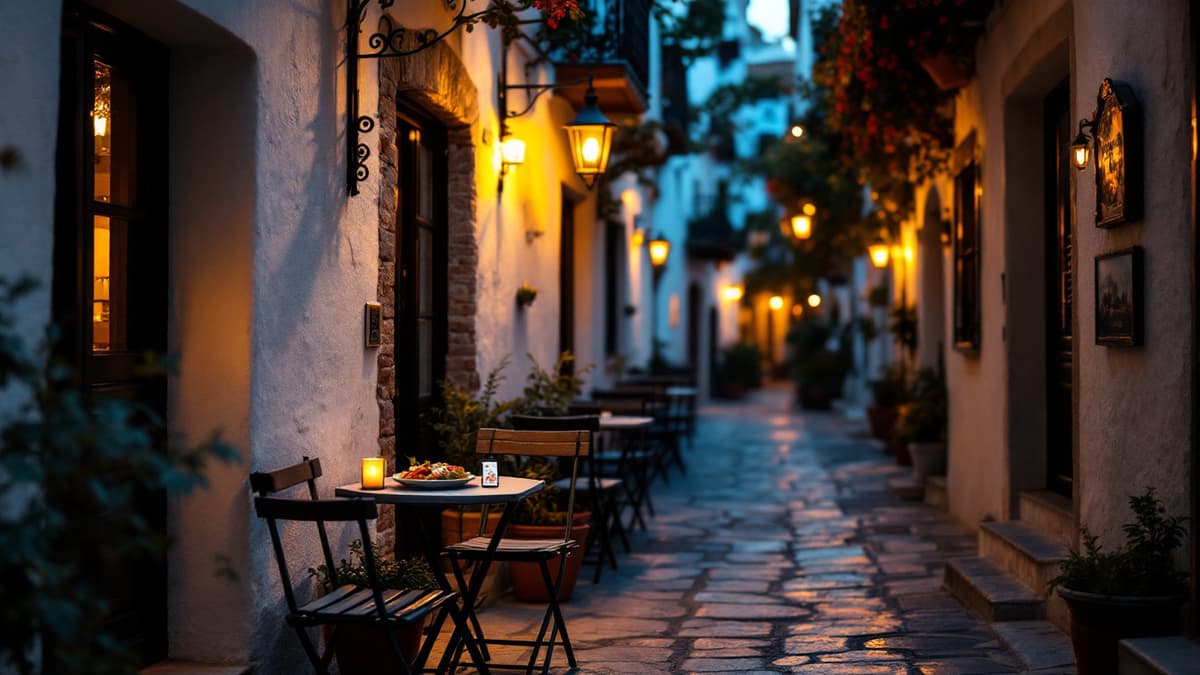
A QR menu in Estepona lands in a town that reinvented itself faster than its menus did. In a little over a decade, Estepona went from a quiet fishing town to the "Garden of the Costa del Sol": a restored old town of flower-lined streets and murals, a marina crowd, boutique hotels, and new residents arriving from half of Europe. The restaurants, many of them small family-run rooms that never planned to become international, now host mixed-nationality evenings most of the year. Here's how a digital menu in Estepona with per-dish video helps a small team serve that new reality without hiring a translator or reprinting a carta every season.
Estepona changed faster than its menus
The town's transformation is the whole story. Ten years ago a two-language laminate, Spanish plus English, genuinely covered an Estepona dining room: local trade most of the year, a British season in summer. Then the old town was restored street by street, the flower pots went up, and Estepona became a destination for people specifically avoiding the noise of the bigger resorts. Today the same family restaurant on a whitewashed side street seats Dutch couples, German retirees, French families and Scandinavian remote workers on an ordinary Tuesday in May. The kitchen didn't change; the room didn't change; the guests did. That gap between a carta built for the old clientele and the new one facing it is what makes the QR menu case in Estepona different from big-city Málaga or brand-name Marbella: here it lands hardest on small teams with no slack to absorb it.
An evening on Calle Real: who's actually at your tables?
Walk the old town at nine on a summer evening and count the languages between the flower pots: more than any laminate can carry. We've measured it in our own beta restaurants on the Costa del Sol (30-day window): guests' device languages span 30+ locales, from 25+ countries in a single month. A couple from Rotterdam is deciphering gazpachuelo from a translation app; a family from Lyon is asking which fried fish is which; a pair of Seville weekenders wants the Spanish carta and nothing else. A per-dish video answers most of those questions before they're asked. Disho shows every dish as a vertical 9:16 video that autoplays muted (a Ken Burns photo fallback when there's no clip), so the fritura malagueña or the tuna tataki explains itself in seconds, in no language at all. The menu text follows: Disho auto-translates names, descriptions and allergens into 12 languages, and each guest picks theirs once. Grubhub's research found menus with photos and complete information receive up to 70% more orders and up to 65% higher sales than text-only listings. The guest orders the dish they can see, not the one word they recognise.
Family-run teams: fewer hands, more covers
A QR menu matters most where the team is smallest. Many of Estepona's best-loved rooms are two-generation family operations: one person in the kitchen, two in the room, everyone doing everything. In August the same crew serves the same room plus a full terrace. Per-table QR ordering removes the laps that eat the evening. Each table gets its own code, printed from the dashboard in one click, and orders arrive in the kitchen in real time already tagged with the table number. At the end, guests pay at the table with Apple Pay or Google Pay instead of waiting for the card machine to cross a packed room. For a four-person team, cutting the order-taking and bill-chasing trips isn't a convenience; it's the difference between coping with the season and turning it into extra covers.
Terraces from Semana Santa to October
Estepona's terrace season is long and it moves: the spring carta isn't the August carta, and neither is the October one. On paper, every shift means reprinting in every language you offer, plus every mid-season price correction, in every language again. On a digital menu it's an evening's work in the dashboard: toggle dishes on and off, adjust prices, and every table's QR shows the new carta instantly, with the translations updating themselves. The printed codes never change, because the QR points to the menu's address, not its contents. If you still want a physical backup for the occasional guest who prefers paper, the menu exports to PDF whenever you need it.
The seafront and the marina: Estepona's second dining room
The old town is only half the story. Along the promenade, chiringuitos run a service the flower streets never see: sunbeds, sand, drinks rounds that outnumber kitchen orders. And at the marina, the Sunday market crowd turns the port's terraces into the busiest lunch of the week. Both formats fit the same system with one change of framing. At a beach bar, every sunbed can carry its own QR code, so a round ordered from the sand arrives tagged with the exact lounger, and nobody does laps across the beach to find out who ordered what; the whole beach gets mapped once on the visual floor plan, alongside the tables. At the marina, the pressure is a lunch surge, a room's worth of covers deciding at the same moment, where ordering from the table feeds the kitchen at a steady rate instead of one crushing wave. Same dashboard, same carta, different rooms.
Families from the resorts: certainty sells
East and west of the centre, the beachfront hotels and apartment complexes fill with families, and family dinners are where menu uncertainty costs the most. A parent ordering for a seven-year-old doesn't gamble: if they can't tell what arrives, they default to chips and grilled chicken, and the kitchen's best work goes unordered. Dish video removes the gamble. The child points at the moving plate, the parent checks the allergens listed on the dish page, and the order happens without a negotiation. A Snappr study measured 35%+ more orders for dishes with high-quality photos on delivery apps; at a family table the same mechanism works in person. There's a full guide to menus with photos and video if you want the detail, and the translation layer (how the 12 languages are generated and quality-checked) is covered in how restaurant menu translation works.
When is paper honestly enough in Estepona?
If your room is a winter bar with a short tapas list and a clientele that's overwhelmingly local, a well-written Spanish carta is genuinely enough. Hanging a QR on it adds nothing. The calculation flips the moment your terrace fills with mixed nationalities: every what-is-this question costs server time twice over, and every dish a guest didn't dare order is margin left on the table. The honest threshold is your own evening: count the languages, count the questions. Estepona's trajectory of more residents, more visitors and longer seasons keeps pushing more rooms across that threshold each year, which is exactly why this guide exists as a spoke of the Costa del Sol cornerstone.
Launch before the terraces fill
Setup takes about five minutes of dashboard work, comfortably between lunch and dinner service:
- Create your restaurant and load the carta, with your own photos and videos or AI-generated ones from the dashboard.
- Turn on the languages your guests actually bring, up to all 12, translated automatically.
- Print the per-table QR codes in one click and lay them out on the visual floor plan.
- Take real-time orders and table payments from the next service, and check the analytics after a week.
Disho is free during the open beta, with no limits on tables, dishes or orders. Chiringuitos, cafés and cocktail bars run the same system with shorter menus. The cafés and bars guide covers that setup, and the live demo shows exactly what your guests would scroll.
Frequently asked questions
Which languages does a QR menu in Estepona need? Spanish and English are the floor; a normal old-town evening adds Dutch, German, French and Scandinavian guests. Disho translates the menu into 12 languages (EN, ES, FR, DE, IT, PL, CS, SK, LT, RU, BE, UK), and dish videos need no translation, which covers the rest.
Is this too much technology for a small family restaurant? The setup is about five minutes in a dashboard, the guests bring their own devices, and nothing about your service has to change: staff still take orders the classic way for anyone who prefers it. Small teams actually gain the most, because every saved trip matters more when there are only three of you.
Do we need to reprint QR codes when the carta changes for summer? No. The printed code points to your menu's address, which always shows the current carta. Swap dishes and prices in the dashboard and every table updates instantly, translations included.
What does it cost for an Estepona restaurant? Nothing during the open beta: unlimited tables, dishes and orders. Try the guest side first in the live demo and judge whether the format fits your room.
Build your QR video menu in minutes
Try Disho free during the beta, no card required.
Get started freeRelated articles
QR Menu for Restaurants in Fuengirola: Serving Residents, Not Just Tourists
A QR menu for Fuengirola restaurants: 12 languages and dish videos for a town of British, Scandinavian and Russian-speaking residents — all year round.
QR Menu for Restaurants in Málaga: Built for a City, Not a Resort
How a QR video menu fits Málaga's urban dining scene: city-break guests, the historic centre, Soho and El Palo chiringuitos — served in 12 languages.
QR Menu for Restaurants in Marbella and the Costa del Sol
A 12-language QR menu for Marbella restaurants: digital menu with video, order and pay at the table. Built for the Costa del Sol's international guests.