
QR Menu for Restaurants in Marbella and the Costa del Sol
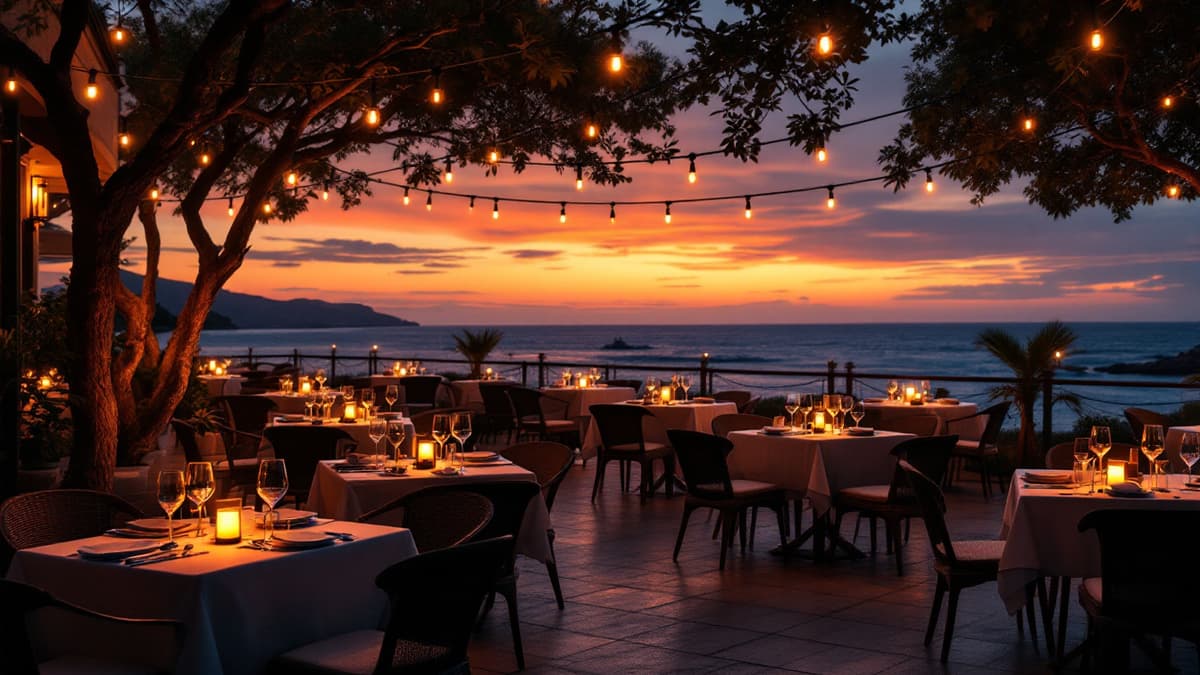
A QR menu in Marbella has to do a job that menus in most cities never face: serve a British family, a German couple, a Scandinavian golf group and Russian-speaking regulars during the same lunch service, on the same terrace. Here's how a multilingual digital menu in Marbella with per-dish video removes the language barrier, speeds up terrace service in August, and swaps between winter and summer menus in minutes instead of reprint cycles.
Why is the language barrier worse in Marbella than almost anywhere else?
Because no single foreign language covers your guests. In most Spanish cities an English translation handles the tourists; on the Costa del Sol a normal evening seats British, Irish, German, French, Dutch, Scandinavian, Russian-speaking and Gulf-state guests, and a two-language paper carta covers perhaps half of them.
Picture three real situations. A beach club near Puerto Banús: a table of six, three nationalities, four minutes of the server acting as translator before anyone orders a drink. A tapas bar in the Old Town: a French couple faces the Spanish-only specials board and orders "the safe thing" (the cheapest item) because they can't tell what pluma ibérica is. A chiringuito in high season: the fifth table today asks what an espeto is, the third asks whether the fried fish contains gluten, in a language nobody on shift speaks well.
Every one of those moments costs money twice: the server's time, and the dish the guest didn't dare to order.
What does a video menu solve that a translated PDF doesn't?
Video needs no translation. Disho shows each dish as a vertical 9:16 video that autoplays muted, TikTok-style, with a Ken Burns photo fallback when there's no clip. A sizzling espeto de sardinas or gambas al pil-pil explains itself to a guest from Oslo or Riyadh in three seconds. No glossary, no server interrogation.
It matters most for the dishes Marbella kitchens are proud of: seafood, cuts and preparations that don't translate cleanly. A PDF leaves the guest guessing what arrives; video removes the guess. Grubhub's research found that menus with photos and complete information receive up to 70% more orders and up to 65% higher sales than text-only listings. Guests order the dish they can see, not the safest word they recognise. You can try the format yourself in the live demo, and the full system (one QR per table, real-time orders, pay at the table) is covered in what a QR menu is and how it works.
How do the 12 menu languages actually work?
Disho translates your menu content (names, descriptions, allergens) into 12 languages: English, Spanish, French, German, Italian, Polish, Czech, Slovak, Lithuanian, Russian, Belarusian and Ukrainian. Guests pick their language once and see every dish in their own words, on their own device.
That set maps well onto the Costa del Sol's actual mix: the big Western European markets, the growing Central European one, and the Russian-speaking community that is a permanent fixture in Marbella, not just a tourist segment. For guests outside those 12, like Scandinavians and Arabic speakers, English plus the video does the job, because the video was never in a language to begin with. If you want the detail on how translation quality is kept in check (the AI writes descriptions from your input at €0.03 per language and doesn't invent ingredients), see how restaurant menu translation works.
One honest caveat: if your clientele is 95% Spanish locals year-round, a well-written paper carta is genuinely enough. This tool earns its keep where the languages multiply.
How do you handle the winter-summer menu swap?
You edit the menu in the dashboard and it's live on every table's QR instantly. No reprinting, no stickers over old prices. Most Costa del Sol venues effectively run two menus a year: a winter carta for locals and residents (menú del día, heartier plates, local pricing) and a summer carta for tourists (terrace-friendly dishes, high-season pricing, more languages needed than ever).
On paper, that swap means reprinting the carta in every language you offer, twice a year, plus every mid-season price correction. On a digital menu it's toggling dishes on and off and adjusting prices in an afternoon, and the translations update with them. If you still want a physical backup, the menu exports to PDF for printing.
Does it actually speed up terrace service in August?
Yes, because it removes the two longest waits in terrace service: waiting to order and waiting for the bill. Each table gets its own QR code (printed from the dashboard in one click, arranged on a visual floor plan), so orders arrive in the kitchen in real time already tagged with the table number. No server relay, no mishearing table 14 as table 40 across a loud terrace.
At the end, guests pay at the table with Apple Pay or Google Pay, straight to your own Stripe account. For a beach club turning tables three times on an August evening, saving ten minutes of order-taking and bill-chasing per seating is an extra service per table per night, precisely when every cover counts.
Which Marbella restaurants already run Disho?
Luini in Marbella runs its full menu on Disho today. Open it and browse exactly what their guests see at the table: dish videos, languages, live ordering. It's the fastest way to judge whether the format fits your own room, because it's a working venue, not a demo mock-up.
Does this work outside Marbella: San Pedro, Estepona, Fuengirola, Málaga?
Yes. The guest mix is the same along the whole coast, so the case is the same. San Pedro de Alcántara's family restaurants serve the resident international community year-round; Estepona's old town has become a dining destination with the same eight-language evenings; Fuengirola has one of Europe's largest Scandinavian and Finnish communities; and Málaga city runs on short city-break tourism where guests decide fast and order faster.
The format also isn't reserved for full restaurants: beach bars, cafés and cocktail spots along the coast use the same system with smaller menus. There's a dedicated guide to QR menus for cafés and bars.
How do you get started before the season?
Set up in an afternoon, well before the terraces fill:
- Create your restaurant and load the carta, with your own photos and videos or AI-generated ones (a dish photo costs about €0.15, a video about €2.20).
- Turn on the languages your guests actually speak, up to all 12.
- Print the per-table QR codes from the dashboard in one click.
- Take orders and payments from the first service, and check the analytics (revenue, average ticket, top dishes, by hour) after a week.
Disho is free during the beta with no limits on tables, dishes or orders; after the beta it's Pro at €40/month with a 3-month trial, and beta accounts keep a permanent discount.
Frequently asked questions
Which languages does a QR menu in Marbella need to cover? Realistically: English, German, French and Russian on top of Spanish cover most tables; Dutch, Italian and the Central European languages close the gap. Disho translates menu content into 12 languages (EN, ES, FR, DE, IT, PL, CS, SK, LT, RU, BE, UK), and dish videos need no translation at all.
Do I need new QR codes when I change the menu for summer? No. The QR code points to your menu URL, which always shows the current carta: swap dishes and prices in the dashboard and every table updates instantly.
Can guests pay at the table without calling the server? Yes. Guests pay from their phone with Apple Pay or Google Pay via Stripe; the money settles to the restaurant's own Stripe account, with a platform fee of 1.5% + €0.10 per transaction on top of Stripe's fee.
What does it cost for a Costa del Sol restaurant? Nothing during the beta: unlimited tables, dishes and orders. After the beta, the Pro plan is €40/month with a 3-month trial, and beta accounts get a permanent discount.
What if a guest's language isn't among the 12? They read the menu in English (or Spanish) and rely on the videos, which communicate the dish without any language. In practice this covers Scandinavian and Arabic-speaking guests well. The video was always the point.
Build your QR video menu in minutes
Try Disho free during the beta, no card required.
Get started freeRelated articles
QR Menu for Restaurants in Estepona: Small Teams, International Evenings
A QR menu for Estepona restaurants: video menus in 12 languages for old-town family kitchens, seasonal terraces and resort-family dinners.
QR Menu for Restaurants in Fuengirola: Serving Residents, Not Just Tourists
A QR menu for Fuengirola restaurants: 12 languages and dish videos for a town of British, Scandinavian and Russian-speaking residents — all year round.
QR Menu for Restaurants in Málaga: Built for a City, Not a Resort
How a QR video menu fits Málaga's urban dining scene: city-break guests, the historic centre, Soho and El Palo chiringuitos — served in 12 languages.