
QR Menu for Restaurants in Málaga: Built for a City, Not a Resort
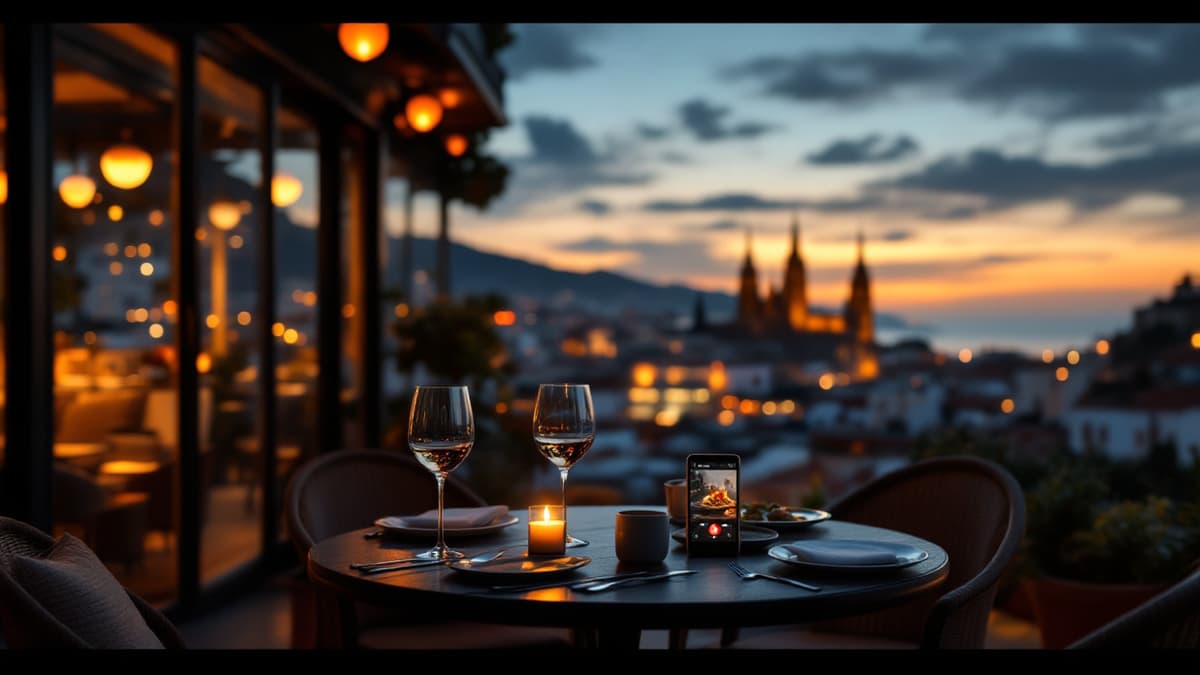
A QR menu in Málaga solves a different problem than it does thirty kilometres down the coast. Málaga is not a resort with restaurants attached. It's a working city with museums, a port, a university and a food scene that became a destination in its own right. Guests here are on 48-hour city breaks, not two-week beach holidays: they decide fast, eat out for almost every meal, and want the local dish they can't pronounce. Here's how a digital menu in Málaga with per-dish video serves that guest, from the historic centre to Soho to the chiringuitos of El Palo, without alienating the malagueños who keep the room full in February.
Málaga isn't a resort. Why does that change the menu?
Because the trade never stops and the guest keeps changing. A beach town's season has a beginning and an end; Málaga's calendar runs all year: museum tourists in spring and autumn, cruise calls through the winter, congress and city-break traffic in between, and a local population that eats out constantly and judges harshly. The Marbella and Costa del Sol guide covers the resort case: one long international summer, then a quiet winter carta. Málaga inverts it. The international mix is a constant drip rather than a seasonal flood, and the same dining room serves a Norwegian couple at 19:00 and a malagueño family at 21:30. A menu system here has to do both jobs at once: translate for the visitor without turning the carta into the kind of tourist laminate that locals cross the street to avoid.
City-break guests decide fast. Does your carta keep up?
A city-break visitor has perhaps four restaurant meals in Málaga and no intention of wasting one. They shortlisted venues on their phone before landing; at the table they make dish decisions the same way: quickly, visually, and with no patience for a wall of Spanish text. This is where a video menu earns its place. Espeto de sardinas, porra antequerana, ensalada malagueña: the dishes Málaga is proudest of are exactly the ones a first-time visitor can't picture from a name. Disho shows each dish as a vertical 9:16 video that autoplays muted, with a Ken Burns photo fallback when there's no clip, so the dish explains itself in seconds. Grubhub's research found menus with photos and complete information receive up to 70% more orders and up to 65% higher sales than text-only listings. For a guest with one dinner to spend, seeing the dish is what unlocks the order.
Three neighbourhoods, three different menu problems
The historic centre, Soho and El Palo don't share a guest profile, and they don't share a menu problem either.
- The historic centre. Around Calle Larios and the Atarazanas market, tourist density is the highest in the city and competition sits door to door. Tables turn fast, servers field the same what-is-this questions all day, and a guest who can't read the carta simply walks to the next terrace. Here the QR menu is about languages and speed: 12 languages on the guest's own phone, orders reaching the kitchen in real time.
- Soho. The arts quarter runs on small plates, fusion and dishes that need explaining even in Spanish. Video does the explaining. A ten-second clip communicates a chef's plate better than three lines of adjectives ever will.
- El Palo and Pedregalejo. The chiringuito strip serves local families and visitors who rode the bus east for "the real thing", side by side. The espeto needs no translation once it's on video, and the local family keeps reading the Spanish carta exactly as before.
What do the 12 languages actually cover?
Disho auto-translates your menu content (names, descriptions, allergens) into 12 languages: English, Spanish, French, German, Italian, Polish, Czech, Slovak, Lithuanian, Russian, Belarusian and Ukrainian. The guest picks a language once and every dish appears in their own words on their own screen. The breadth is not a guess: across our own beta restaurants on the Costa del Sol (30-day window), guests' device languages span 30+ locales, with guests from 25+ countries in a single month. For Málaga that covers the big city-break markets (British, German, French, Italian, Polish) plus the Russian-speaking residents and visitors who are a steady presence across the province. Guests outside the twelve, like Scandinavians, Arabic speakers or the occasional Japanese tour group, read English and lean on the video, which was never in a language to begin with. How translation quality is controlled (the AI writes from your input and doesn't invent ingredients) is covered in how restaurant menu translation works.
One honest caveat, same as anywhere: a barrio bar with a 95% malagueño clientele doesn't need this. The tool pays for itself where the languages multiply, which, in the centre, is every single service.
Can a QR menu speed up service on centre rents?
Yes, by removing the two waits that cap your table turnover: waiting to order and waiting for the bill. On a pedestrian-street terrace the server can't see every table from the pass; guests sit with closed menus and open wallets while the kitchen idles. With a per-table QR code, the order arrives in the kitchen in real time, tagged with the table number, the moment the guest decides. At the end, guests pay at the table with Apple Pay or Google Pay instead of flagging someone down for the card machine. In the centre, where rent is priced per square metre and a table is a production asset, an extra turn per evening is the whole business case. On cruise days, when a few thousand guests want lunch in the same three hours, ordering at the table is the difference between serving the surge and watching it walk past.
And in February? The carta has to stay local
A Málaga dining room has no off-season to hide in. When the cruise calls thin out and the terraces contract, the same room lives on malagueño lunch trade (menú del día, regulars, office tables) and a menu system that shouts "tourist" would poison exactly that trade. The QR setup stays neutral: the Spanish carta is the natural first view, staff keep taking orders the classic way for anyone who prefers it, and the menú del día gets edited in the dashboard each morning in less time than it takes to chalk it on the board. Meanwhile the analytics keep working through the quiet months: revenue by hour and top-dish data show what the winter room actually orders, which is the cleanest input for pruning the carta before spring. The result is one system serving both halves of the year, not a summer gadget that gets switched off in November.
Does video really change what people order?
The evidence says yes, and not only Grubhub's. A Snappr study of restaurant delivery apps measured 35%+ more orders for dishes with high-quality photos. In the dining room the effect concentrates where Málaga menus make their margin: the second course the guest wasn't sure about, the dessert that sells itself on loop, the vermút that looks better moving than described. Nothing to install, either. The menu runs in the phone browser, which matters for tourists on roaming data. There's a full guide to menus with photos and video and another on raising the average ticket. Or skip the theory and scroll the live demo to see the exact feed your guests would.
How do you set it up between two services?
Setup takes about five minutes of dashboard work, not a migration project:
- Create your restaurant and load the carta, with your own photos and videos or AI-generated ones straight from the dashboard.
- Turn on the languages your guests actually speak, up to all 12, translated automatically.
- Print the per-table QR codes in one click.
- Take real-time orders and table payments from the next service, and read the analytics (top dishes, revenue by hour) after the first week.
Disho is free during the open beta, with no limits on tables, dishes or orders. If your venue is a café, bar or cocktail spot rather than a full restaurant, the cafés and bars guide covers the shorter-menu setup.
Frequently asked questions
Which languages does a QR menu in Málaga need? English covers the largest share of visitors, but a normal centre service adds German, French, Italian and Russian-speaking guests within an hour. Disho translates the menu into 12 languages automatically, and dish videos need no translation at all, which also covers Scandinavian and other guests outside the twelve.
Do El Palo chiringuitos need this, or is it a centre thing? The strip's mix is genuinely double: local families who need nothing translated, and visitors who came specifically for espetos they can't name. The Spanish carta stays the default for locals; the video and the languages switch on for everyone else. Same QR, same menu.
Will malagueño regulars accept a QR menu? They don't have to change anything: the QR is also just a menu, staff still take orders the classic way for anyone who prefers it, and the Spanish version is right there first. QR ordering is an extra lane, not a wall.
What does it cost for a Málaga restaurant? Nothing during the open beta: unlimited tables, dishes and orders. Setup takes about five minutes, and you can try the guest side first in the live demo.
Build your QR video menu in minutes
Try Disho free during the beta, no card required.
Get started freeRelated articles
QR Menu for Restaurants in Estepona: Small Teams, International Evenings
A QR menu for Estepona restaurants: video menus in 12 languages for old-town family kitchens, seasonal terraces and resort-family dinners.
QR Menu for Restaurants in Fuengirola: Serving Residents, Not Just Tourists
A QR menu for Fuengirola restaurants: 12 languages and dish videos for a town of British, Scandinavian and Russian-speaking residents — all year round.
QR Menu for Restaurants in Marbella and the Costa del Sol
A 12-language QR menu for Marbella restaurants: digital menu with video, order and pay at the table. Built for the Costa del Sol's international guests.